Showing posts with label Orphans First. Show all posts

Wednesday, July 31, 2019

Shrewd Samaritan—Faith, Economics, and the Road to Loving Our Global Neighbor


This book took me by surprise. As founder of Orphans First, I was already passionate about concretely loving our global neighbor—but economics, not so much. That word seemed scary. But I was blown away by what I learned from Bruce Wydick in his book, Shrewd Samaritan—Faith, Economics, and the Road to Loving Our Global Neighbor. 

Most of us want to do more to help the poor, but we often don’t know the best way to go about it. Should we give, go, serve and whichever we feel led to do, where are our efforts best used? Where will we make the greatest impact with what we have to offer? 

Bruce Wydick explores these questions by sharing his prolific research on the diverse impacts of giving. He walks us through the thinking process to help us discover the way or ways in which we are individually called to care for our global neighbor. He gives us the tools to analyze whether our best impact would be in donating time, talent, funds...or all of these. 

Not every form of giving has the greatest impact. It is useful to evaluate the best possible way we can do the greatest good with our limited abilities. And then just do it!
The catchy title, Shrewd Samaritan, is a combination of two parables taught by Jesus. We know them best as The Good Samaritan (Luke 10:25-37) and The Shrewd Manager (Luke 16:1-9). As Wydick points out, we all understand the Jesus’ message in his parable of The Good Samaritan. But the Shrewd Manager, that flies over our heads. Why would Jesus commend a dishonest, deceitful trickster? What does he want us to learn from him? 

The author tells us, “…money is temporal, but people and relationships are not. He goes on to explain that the Greek word used for worldly wealth in this parable is “mamonos” (“mammon” in the old King James Bible translation). It means more than money; it means our possessions. That certainly adds a deeper meaning. We are accountable to steward our belongings wisely. 

Remember how the word “economy” scared me? (All those numbers and spreadsheets.) Well, not any more. Wydick points out that the word “manager” in the Greek is “oikinomon” which means economics. Now that I like. 

Shrewd Samaritanis full of helpful examples illustrating diverse ways a person can impact the lives of the poor. He demystifies the call to help and makes it appealing. 

The book is published by Thomas Nelson and is in bookstores everywhere. Bruce Wydick is author of several books and professor of economics and international studies at the University of San Francisco. 

This article also appears in Assist News Service. 

I highly recommend Shrewd Samaritan. As director of Orphans First, I plan to reread often.
Janey DeMeo M.A.

Copyright © July2019

Monday, November 05, 2018

Orphans First Mini Video


It has been a while since I posted. (My apologies!) I will spare you of the excuses, legitimate as they may be. Instead, I’ll go ahead and post the Orphans First Mini Video to remind us of what’s important.

I appreciate your prayers for the children-in-crisis, the orphaned, neglected, abused, exploited, and impoverished kids everywhere. Oh, and the unborn. I think of them too--particularly on the eve of a pivotal election here in America when unborn children's lives are at risk of extreme cruelty as certain politicians continue to support partial abortion--a horrendous act in which a fully formed baby of 9 months gestation is chopped apart mercilessly and the parts sold for big bucks). 

Thank yu for your prayers for Orphans First and children-in-crisis everywhere. Keep watching this channel for a link to our new revamped website – coming soon. Meanwhile, enjoy this video (with original music by singer-songwriter Francesco DeMeo). 


Friday, September 29, 2017


The Grown-Up’s Guide to Teenage Humans by Josh Shipp aims to show us how to decode their behavior, develop unshakable trust, and raise a respectable adult. And overrall it delivers.

Josh Shipp was a troubled teen himself. I heard him speak in Orlando a few years back at the Christian Alliance For Orphans conference. His presentation was powerful, funny and loaded with compelling information. 

Josh spent most of his young life in and out of foster homes and was so used to being rejected, he made it his goal to get booted out of each foster home as quickly as possible—and by any means possible. He was good at it. Until one day, one person changed everything. Rodney, an ordinary guy was catalyst to changing this troubled teen’s life so simply and yet so drastically that Shipp became an an expert, an authority and an advocate for teens.

Drawing from his own experience, education and humor as well as a myriad of resources, Shipp’s book TheGrown-Up’s Guide to Teenage Humans covers many relevant topics including: stages of growth, identity, relationships, communication, education, drugs, sex, depression, eating disorders, sexting, cutting, hormones, pornography, bullying…

He seems to hit on just about everything pertinent to today’s teen culture, and provides guidelines—including potential scenarios and coversations—on how to navigate it and best reach the teens in our lives.

Josh Shipp’s book almost covers it all. Almost. But there is something lacking—at least from my perspective as a child advocate working with troubled kids (Orphans First),  and as an author of a biblical parenting book. The most important ingredient for teens and adults investing in teens seems to be missing from this book: the God factor.

If Josh Shipp’s goal is to provide practical guidelines across the spectrum for those of us who love the teens in our lives, the book is a fabulous tool—a fabulous handbook of wisdom. But if Shipp wants to help us the caregivers, and help them the teens, to have a higher chance of true success – eternal success – then  bringing God into the picture would seem a no-brainer—especially coming from a Christian perspective.

Still, The Grown-Up’sGuide to Teenage Humans clearly pinpoints how to get teens and supplies excellent pointers and pity key comments on how to help them thrive.

The Grown-Up’s Guide to Teenage Humans (Harper Wave) can help any parent, foster parent or caring adult navigate mentoring the teens in their lives.  Check it out here. 

This article also appears in Assist News. 

Janey DeMeo M.A.

Copyright © September 2017


Wednesday, July 06, 2016

A World Without Orphans

Imagine a world without orphans, a world where every child belongs to a family who loves and nurtures them. That sounds like Heaven right? But how could such a world this side of Heaven come about? A World Without Orphans highlights how this can happen. Through real-life stories, the film shows that if we all do our part, whatever part that may be, it is possible.

I was first introduced to A World Without Orphans at the Christian Alliance For Orphans (CAFO) 2016 Summit in Orlando. (Orphans First is a member organization of CAFO.) Since we, like other likeminded organizations, strive hard to get children into families, this film really caught my eye. And my heart!

In fact, I would go as far as to say that producers Dianne Becker and Brittany DeVries together with Steve Saint from ITEC have captured God’s heart and shown a glimpse of it through this heart-touching film.

Experience and statistics prove that children thrive best in families. For those of us who have kids or grandkids, we can’t imagine what it would be like if they didn’t have us. Right? The key, therefore, is to find families for orphans and foster children. And the best place to find them is within the church community which can also provide a concrete support system for those who take children in. (We’re talking about spiritual, emotional and physical support—not just a paycheck.)

In Africa, for example—and I know this firsthand—most children have at least an extended family relative who could take them in if there was a solid support system to help them. Where there is no extended family, there may be neighbors who genuinely care for the children. And when the local church wraps around them to provide physical, spiritual and emotional support, there is a recipe for success. (Not that it is easy. Life with kids is always messy. But it can be done and, as depicted in A World Without Orphans, children can live wholesome, happy lives.)


A World Without Orphans is both inspiring and challenging. It calls us to consider the biblical mandate to take care of orphans and to seriously probe our hearts as to what we can do to make this happen. Not everyone can take an orphan into their home, but everyone can do something to help someone do this—beginning with prayer.

I believe in the message this film propagates. Our Orphans First children’s homes in India are “homes” not institutions—and they function as Christ-centered families. I’ve seen the difference in the lives of our kids as they grow up and know they are loved by house-parents and the local church. Many have gone on to serve Jesus and have families of their own. In Mexico, we support some extended families who have taken in children whose parents have been killed through bad drug-deals. In Siberia, through our local church partners, we try to bring children in to foster homes. Local churches and their families provide hope and stability to orphans.

Imagine what could happen if every church showed a screening of A World Without Orphans. It could become a reality. If you would like to host a screening at your church, contact A World Without Orphans via their Facebook page. Please be sure to "like" and follow them on Facebook to create more buzz and to receive notices of upcoming grassroots or festival screenings. You will also find great articles of interest related to the cause.

Check out the trailer here.

If your church has an orphan ministry, this is a great place to hold a grassroots screening to start a conversation and spark interest within the congregation. (If your church does not have an orphan ministry and you sense God wants you to start one, find all the materials and help you need here: https://cafo.org.

The movie can also be purchased and downloaded here at www.christiancinema.com. And keep checking the website. There will soon be subtitled versions available in both Spanish and French.

This article will also appear in Assist News Service.

As a P.S. to this article, let us not stop praying for Lexi who was ripped from the loving family she had thrived in for some 4 years. Let us pray for God to bring Lexi home. 

Janey DeMeo M.A.

Copyright © July 2016


http://janey-demeo.blogspot.com

Wednesday, April 06, 2016

Fatal Shootings Affect Orphans First Program in Mexico


Some children are used to seeing murder—and I am not referring to what they see on TV. This is especially the case with the kids in the Orphans First children’s program in Pedregales, a drug-infested barrio of Tijuana, Mexico where four fatal shootings recently took place—two directly affecting kids in the program.

In one case the mother of seven kids was shot and killed over a bad drug deal. One of her sons, David, was shot and killed three years ago at age sixteen. The remaining children have different fathers and no one knows who or where they are. Most of the children are now living with their grandmother, Mary.

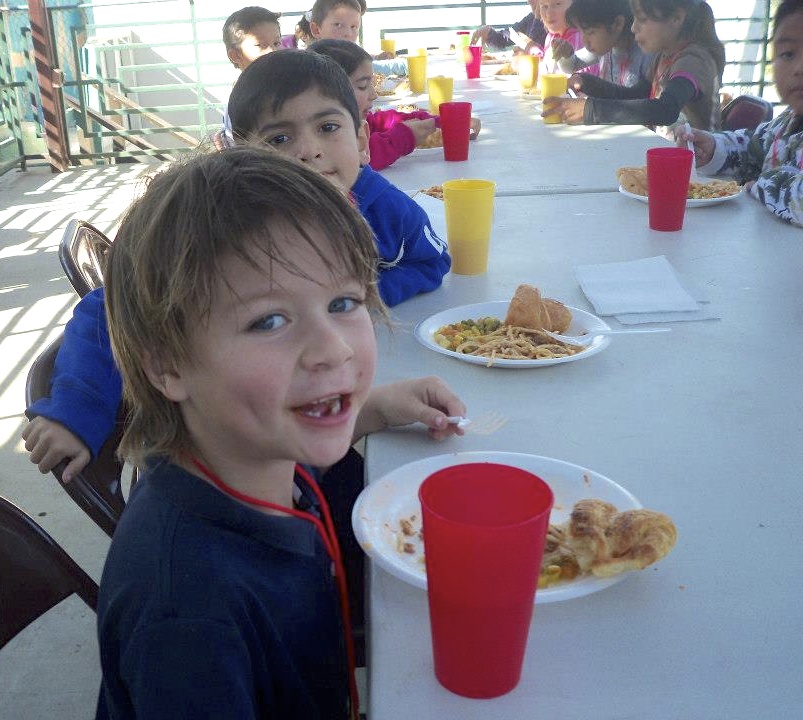
Some of these children attend the Orphans First program, including nine-year-old Jennifer who has AIDS and two of her younger brothers. Like most of the kids in the neighborhood, the children are undernourished. (The meals they receive in the Orphans First program are probably the only balanced food they eat.)

The Orphans First program director, Deanna, and Calvary Chapel Pedregales, are doing all they can to help this family in crisis with food and other necessities as they do for other impoverished neighbors including Lupita and her three little ones. Lupita, a girl who cleans the property, is another victim of the recent shootings, which killed her husband.  

These murders stress the importance of the Orphans First children’s program, which provides afterschool tuition, clothes, food, toys, medical assistance and Bible teaching for some forty kids, and also helps their families. But there are hundreds more kids who would like to be in the program. We simply do not have enough help.

For children who attend the program regularly, their chances of a better future are greatly increased. Biblical teaching, general education as well as belonging to a solid church community will hopefully aid these little ones to reach for God’s best and rise beyond the status quo of their environment.

But nothing is simple. Nothing is as it should be. Some kids find it hard to attend regularly simply because they find themselves having to take care of younger siblings. And in the case of older kids, they often drop out of the program when they reach pre or early teen years, drawn away by the world’s allures.

And, given their surroundings, it is no surprise.

Pedregales is, after all, an impoverished drug riddled colonias of Tijuana. The unsanitary conditions of slum homes precariously built onto the slopes of the ravine (propped up by scraps and old tires) starkly contrast the view—San Diego high-rise buildings. Unpaved roads, poor drainage and sewage, unreliable electricity and limited water access contribute to health problems for these impoverished people who, for the most part, have little access to health care.

To add to the problem, the local public school lacks quality education and oftentimes lacks attendance. Kids frequently miss school. Parents are either dysfunctional owing to alcohol or drugs or just plain overwhelmed trying to survive. “I didn’t wake up so I didn’t go,” is a frequent comment kids make. No one was there to wake them. But without education, the children will likely end up like the adults in the vicinity—trying to make ends meet through prostitution or drug deals. (Already by age twelve, many children are drawn into this sordid lifestyle.)

While we thank God for every child in the Orphans First children’s program in Pedregales—for the help they receive—it is nonetheless hard not to feel sad knowing hundreds of others would love to be in the program and could radically benefit from it. It is also hard to ignore the plight of those older kids who leave to get caught up in the fray of the drug rackets. How can we reach them all? How can we do more?

Part of the problem is this: there are simply not enough helping hands to do more at this time. We need more full-time workers to take care of these kids—and, of course, funds are always needed.

No wonder Scripture teaches, “Ask the Lord of the harvest, therefore, to send out workers into his harvest field" (Proverbs 9:38).

Orphans First programs include two children’s programs in Mexico and four children’s homes in India. Watch the short promo videos and find out more about OrphansFirst here.

Finally, as we pray for these children, let us not forget kids in America who have been thrown extremely painful situations. Recently,a six-year-old girl, Lexi, who was ruthlessly removed from her family in California. Read my article here. Pray and speak up for Lexi by signing the petition here.

May God help us hear His heartbeat and do our part so that these childen’s lives will be significantly better.

This story also appears in Assist News Service. 

Janey DeMeo M.A.

Copyright © April 2016


Thursday, July 09, 2015

Orphans First, helping impoverished children worldwide


Please check out our 3-minute YouTube with special footage highlighting the work of Orphans First. Orphans First provides food, clothing, education, medical, shelter for desperately poor children and orphans in several countries. Please consider partnering with us to help reach more children. Check out the Orphans First website. 

Janey DeMeo M.A.

Copyright © July 2015

http://janey-demeo.blogspot.com